

A new report compiled by lawmakers on the financial crisis leaves no stone unturned and blatantly criticizes the Office of Thrift Supervision for its “reluctance to interfere with unsound lending and securitization practices.” Senators Carl Levin (D-Mich.) and Tom Coburn (R-Okla.) released the “Wall Street and the Financial Crisis: Anatomy of a Financial Collapse” report on Wednesday, which is based on a two-year study led by the U.S. Senate Permanent Subcommittee on Investigations. The report concluded “the crisis was not a natural disaster, but the result of high, risk complex financial products, undisclosed conflicts of interest,and the failure of regulators, the credit rating agencies and the market itself to rein in the excesses of Wall Street.” The report throws egg in the face of the OTS saying the regulator “displayed an unusual amount of deference to lender Washington Mutual’s management, choosing to rely on the bank to police itself” when issues over mortgage lending and securitization practices arose. The report blames OTS for maintaining this attitude even after the agency identified “over 500 serious deficiencies (at WaMu) in five years.” The report added, “OTS did not once, from 2004 to 2008, take a public enforcement action against Washington Mutual to correct its lending practices, nor did it lower the bank’s rating for safety and soundness.” Washington Mutual became a case study for lawmakers working on the report. The study reveals that WaMu — the largest bank failure in U.S. history — would have depleted the entire $45 billion deposit insurance fund if the the bank had not been sold to JPMorgan Chase for $1.9 billion. The report said the percentage of WaMu originations classified as high-risk loans grew from 19% of its portfolio in 2003 to 55% in 2006. “From 2000 to 2007, WaMu and Long Beach together securitized at least $77 billion in subprime loans,” the report said. In addition, the study’s authors say WaMu and its Long Beach originator steered high-risk borrowers into larger loans and higher-risk products, while also accepting loans without verifying borrower income. The Senate subcommittee even reviewed reports from WaMu President Steve Rotella who described the bank’s Long Beach origination platform as “terrible” and “a mess.” The Senate report also is short on sympathy for lenders. “These lenders were not the victims of the financial crisis; the high risk loans they issued were the fuel that ignited the financial crisis,” the bipartisan Senate study concluded. Investment banks Goldman Sachs (GS) and Deutsche Bank (DB) also are hit in the report for designing and promoting “complex financial instruments” such as residential mortgage-backed securities, credit default swaps and CDS contracts linked to the ABX index. The report even punched Goldman Sachs for using net short positions to benefit from the downturn in the mortgage market as the products they promoted began to unwind. In the Deutsche Bank study, the Senate Subcommittee uncovered information on how the bank’s top global CDO trader Greg Lippman warned his colleagues and his clients about the poor quality of RMBS securities underlying may CDOs, even describing them as “crap” and “pigs.” “The free market has helped make America great, but it only functions when people deal with each other honestly and transparently. At the heart of the financial crisis were unresolved, and often undisclosed, conflicts of interest,” said Sen. Coburn. “Blame for this mess lies everywhere from federal regulators who cast a blind eye, Wall Street bankers who let greed run wild, and members of Congress who failed to provide oversight.” Write to Kerri Panchuk.
 3 minute read
Senate report on financial crisis rips regulators, banks, investment firms
April 13, 2011, 10:00pm

Kerri Ann Panchuk was the Online Editor of HousingWire.com, and regular contributor to HousingWire magazine. Kerri joined HousingWire as a Reporter in early 2011 and since earned a law degree from Southern Methodist University. She previously worked at the Dallas Business Journal.see full bio
Most Popular Articles
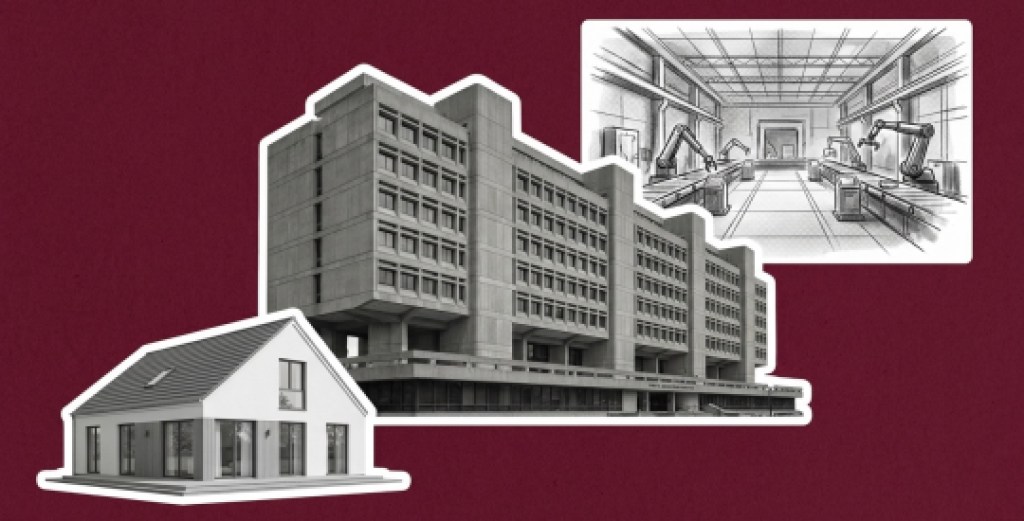
HUD tests a new Operation Breakthrough for today’s housing crisis
“Gallia est omnis divisa in partes tres.” All Gaul is divided into three parts. Julius Caesar used those words more than 2,000 years ago to begin an account of military conquest. America’s housing affordability challenge might be described similarly. Like Gaul of yore, it divides into three parts: talk, action, and outcomes. Identifying the three […]
Jun 23, 2026
-
Why we can’t get more housing construction in the US
Jun 24, 2026 -
Fannie Mae to expand title pilot program, Pulte says
Jun 24, 2026 -
Housing demand holds steady as regional inventory trends reshape the market
Jun 25, 2026 -
Mortgage performance steady in May as calendar drives delinquency bump
Jun 26, 2026 -
Florida homebuyers sue Compass over $475 transaction fee
Jun 26, 2026
Latest Articles

When AI listing videos look too real: the disclosure test agents need now
Agents using AI listing videos should disclose simulated footage and material edits, as states like California set 2026 rules.
Kerri Ann Panchuk was the Online Editor of HousingWire.com, and regular contributor to HousingWire magazine. Kerri joined HousingWire as a Reporter in early 2011 and since earned a law degree from Southern Methodist University. She previously worked at the Dallas Business Journal.see full bio


