 Previous
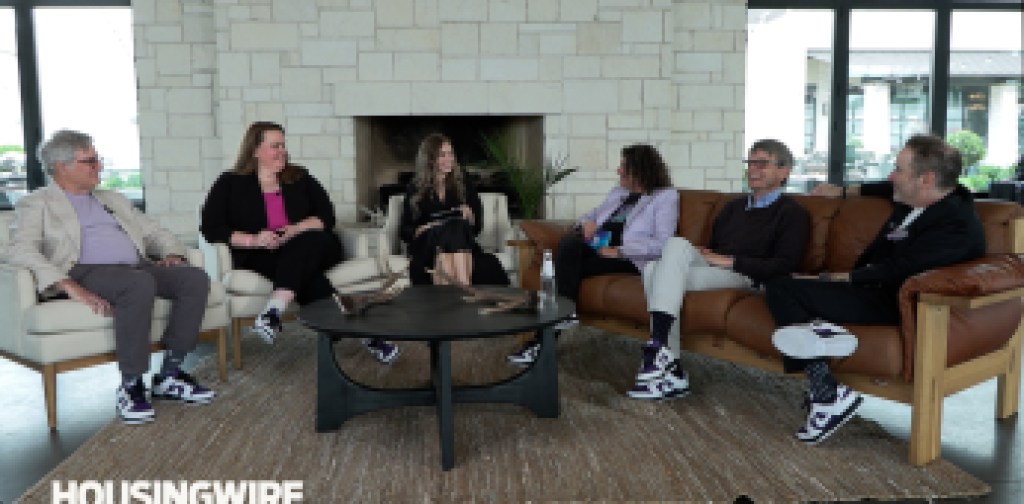
 In a conversation with HousingWire’s Allison LaForgia, Susan Shaffer, Vice President of Underwriting at Primary Residential Mortgage, and Kayla Eames, product manager at Tavant, discussed how automation is transforming underwriting from a bottleneck into a scalable, efficiency-driven process.
Shaffer pointed to volatility in loan volume as the catalyst for change. “After the rapid rise in volume and then the following decline in volume, it became very obvious that scaling to that volume through hiring and then having to downsize was not a sound business model,” she said. “We really looked at the underwriting process . . . our long-term goal was to build capacity inside the fulfillment team so that we could manage changes in volumes without having to have a knee-jerk reaction.”
Eames explained that the technology was designed to remove repetitive tasks from underwriters’ workloads. “It’s really trying to figure out the best ways that technology can do stare and compare . . . to save the underwriters valuable time on tasks that don’t necessarily need their highest and best use,” she said. “Making sure that we could program the AI technology to be able to do those things and empower.”
The impact has been immediate. “The most noticeable difference is a significant decrease in the amount of time it takes an underwriter to do the initial file review,” Shaffer said. “You’re reading all of the documentation . . . compiling all of that information and turning it into actionable items. So we’ve seen a significant decrease in the time it takes.”
That efficiency gain translates directly into business flexibility. “We again have the ability to scale to volume,” she added. “We have an opportunity to sit down and have a discussion about whether we need to replace that role, or whether we can move forward and have the technology kind of pick up the slack.”
Beyond speed, consistency has emerged as a major benefit. “Consistency in underwriting is challenging… you’re still dealing with individual minds,” Shaffer said. “The technology is posting the majority of the conditions . . . and the result is that we’re getting more consistent decisions and more consistent behavior.”
Trust in the system has grown through real-world validation. “One of my favorite things . . . is that kind of aha moment . . . where the automation cited something that they didn’t have in their notes,” she said. “That really turns them into a full adopter.”
Eames echoed that sentiment. “Sometimes I admit I get embarrassed that Touchless caught something I missed,” she said. “It’s a really great exercise . . . making sure that the AI still consistently does what it’s designed to do.”
Adoption, they agreed, depends on hands-on experience. “By that third file . . . they suddenly are like, wait, this is pretty cool,” Eames said. “It is catching the things that I would have conditioned for.”
Looking ahead, Shaffer sees a fundamental shift in the role of the underwriter. “I would like to see [tasks] peeled away . . . so that the underwriter can really exercise their super skill, which is critical thinking,” she said. “Focused on . . . credit worthiness and policy compliance… without becoming a checklist-driven type of reviewer.”
For lenders, the message is clear. “If you’re not using technology today to help accelerate decision making, reduce risk and maximize efficiencies. I think you’re already behind the curve,” Eames said. “It’s really important to embrace that.”