

 4 minute read
|
When policymakers raided the piggy banks of new homeowners last year by raising guarantee fees to pay for the payroll tax holiday, I cautioned against this dangerous precedent. Sadly, it wasn’t difficult to predict that Congress would try tapping the housing piggy bank again. Unfortunately, we seem to be stuck in our own version of the movie “Groundhog Day” where the same scene unfolds again and again. Guarantee fees are a critical risk management tool used by Fannie Mae and Freddie Mac. Consequently, using guarantee fees as a funding mechanism for other purposes makes it more difficult for Fannie Mae and Freddie Mac to protect against losses from faulty mortgages. Additionally, the unintended impact of any guarantee fee increase would be to increase borrowing costs, preventing the absorption of our nation’s large real estate owned inventory, as well as curtailing refinance activity that has widespread benefits for homeowners and our nation’s economy. UNTENABLE PRECEDENT The Mortgage Bankers Association’s members were deeply troubled last year when, in spite of widespread vocal opposition, Congress approved the use of a 10 basis-point g-fee increase to fund a two-month extension of the payroll tax relief. Our concern that such action would establish an untenable precedent for treating housing as the nation’s piggybank was validated when, as the year went on, Congress again looked to guarantee fees as budget offsets, first for a 10-month extension of the payroll tax relief, and then to fund efforts to remediate the area affected by the Gulf Coast oil spill. Two additional attempts were made in May — one to offset the costs of maintaining current student loan interest rates and the other to offset the costs of refinancing mortgages that Fannie Mae and Freddie Mac didn’t even own. Finally, in November, Congress attempted to raise guarantee fees, yet again, to pay for certain immigration reforms. Each time an additional $3 million was needed here or $4 million was needed there, the notion of raising taxes on homebuyers and homeowners through guarantee fees was brought to the table. While preserving student loan affordability and providing assistance to those affected by the Gulf oil spill are laudable objectives for Congress, increasing guarantee fees for this purpose effectively taxes potential homebuyers and consumers looking to refinance their mortgages at a time when the nation’s housing sector remains in a precarious state. It is imperative that we avoid taking any steps that may impede the budding real estate recovery and ultimately send our overall economy into another tailspin. Our national gross domestic product has been growing at about a 2% rate since 2010 and according to MBA’s economists, the housing market accounts for up to 20% of this growth in 2012. Therefore, even the slightest change to the mortgage market, good or bad, could have a significant overall impact to our economy. The real estate finance industry has the potential for a very bright future. We have record low mortgage interest rates. In addition, home prices are stabilizing, consumer sentiment is rising and the affordability index is near its peak. To be sure, an enormous opportunity lies ahead with the 80 million-strong echo boomers, who are just starting to turn 30 and wanting to buy homes to raise their families. But adding 10 basis points here and 10 basis points there to guarantee fees puts home affordability at risk. It serves as a tax increase on the qualified homebuyers we are trying to help. BROADER DISCUSSION We are also concerned that Congress is continuing the discussion of guarantee fees without the benefit of full public debate on the broader discussion of the proper role of the federal government in the housing finance system. Dipping back into the housing piggybank to pay for unrelated policy proposals sends the wrong message. Increasing the cost of most mortgages will only add to the uncertainty plaguing the mortgage market, hold back a more robust housing recovery and potentially hinder the necessary reforms required of the GSEs in the months and years ahead. Throughout 2012, the MBA, the National Association of Home Builders and the National Association of Realtors stood united to prevent the repeated attempts of policymakers to raise guarantee fees to pay for other initiatives. We were united in our belief that using guarantee fees as a funding mechanism for this purpose shifts the costs to borrowers in other segments of the housing sector in a manner that prevents Fannie Mae and Freddie Mac from effectively managing their risk. Until Congress learns not to use guarantee fees as a safety net, we will continue to replay this scene over and over again. Given the current economic climate and exploding federal deficits, innovative solutions are imperative to getting our country back on the right economic track. But raising guarantee fees is not the answer. It’s a sign of weakness for this country if we can’t make hard decisions without using the GSEs as piggy banks. Policymakers need to take a hard look at all the consequences before rushing, once again, into such a short-sighted decision.
|
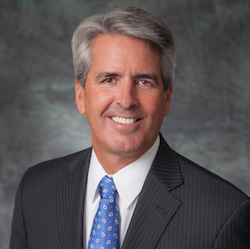
David H. Stevens is a housing policy finance advisor. He is the former president and CEO of the Mortgage Bankers Association and former commissioner of the Federal Housing Administration. Stevens currently serves on the board of directors at Dynex Capital.see full bio
Most Popular Articles

We are not ready for the next housing downturn
Pandemic-era forbearance and modifications relied on servicer liquidity supported by a refi boom and lower rates. If a downturn arrives amid inflation, policymakers may need new liquidity backstops to prevent servicer failures and borrower harm.
Jul 21, 2026
-
Manhattan project contractor error eyed in conversion collapse
Jul 21, 2026 -
Will Trump’s new Canadian tariffs add cost risk for builders?
Jul 21, 2026 -
Housing Market Spotlight: Lower-priced metros show greater resilience as demand softens
Jul 22, 2026 -
Michigan’s Whitmer steps up, signs single-stair reform into law
Jul 22, 2026 -
Mortgage rates hit yearly high as Iran conflict escalates
Jul 23, 2026
Latest Articles

Coldwell Banker Warburg folds into Compass in New York
Coldwell Banker Warburg will operate as Warburg at Compass in New York, and Compass has not set a timeline for the transition.
-
Don’t fall for a fake foreclosure crisis
-
Deed theft remains a growing threat for seniors, Black homeowners
-
Berkshire completes Taylor Morrison deal valued at $8.5B enterprise value
-
NVR is land light by design, Q2 2026 reveals the strategy has limits
-
Equity Union expands into Nevada with first market outside California
David H. Stevens is a housing policy finance advisor. He is the former president and CEO of the Mortgage Bankers Association and former commissioner of the Federal Housing Administration. Stevens currently serves on the board of directors at Dynex Capital.see full bio


