3 minute read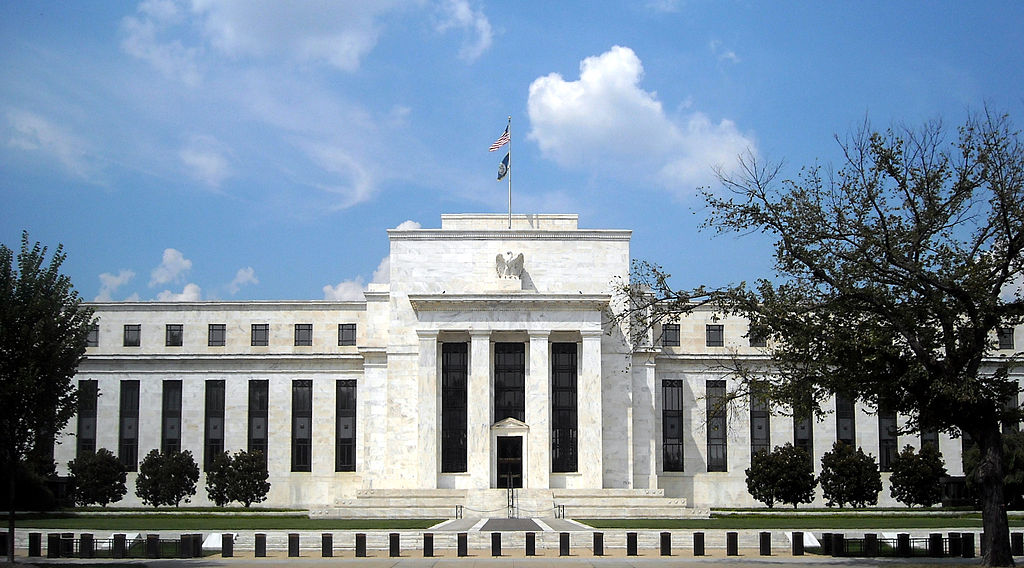
Economist Alan Greenspan, the former long-time Federal Reserve chairman who guided the U.S. through a historic decade of economic growth before his policies were later tied to the 2008 housing crisis, died at his home on Monday due to complications of Parkinson’s disease. He was 100.
Greenspan, the 13th Chairman of the Board of Governors from 1987 to 2006, had a storied career in consulting, including through his company, Greenspan Associates LLC. He served the Fed for five consecutive four-year terms, holding the second-longest tenure as Fed chair, following William McChesney Martin (1951-1970).
His death was announced in a statement by his wife of 29 years, Andrea Mitchell, chief Washington correspondent and chief foreign affairs correspondent for NBC News.
“He was a giant of a man who helped shape the U.S. economy for decades under presidents of both parties, but was always honest in acknowledging his mistakes,” Mitchell said in a statement to NBC.
Under Greenspan’s leadership, the U.S. experienced a decade-long economic boom from 1991 to 2001. However, his policies — including low interest rates and a push for deregulation — created conditions that many said allowed subprime mortgages to flourish, ultimately contributing to the global financial crisis of 2007-2008.
“More than 30 years of deregulation and reliance on self-regulation by financial institutions, championed by former Federal Reserve chairman Alan Greenspan and others, supported by successive administrations and Congresses, and actively pushed by the powerful financial industry at every turn, had stripped away key safeguards, which could have helped avoid catastrophe,” the bipartisan Financial Crisis Inquiry Commission stated in 2011.
During testimony before the U.S. House of Representatives in October 2008, Greenspan noted that he had raised concerns in 2005 that the protracted period of risk underpricing would have dire consequences. However, he admitted the crisis “turned out to be much broader than anything I could have imagined.”
“Those of us who have looked to the self-interest of lending institutions to protect shareholders’ equity, myself especially, are in a state of shocked disbelief,” Greenspan said at the time. “Such counterparty surveillance is a central pillar of our financial markets’ state of balance. If it fails, as occurred this year, market stability is undermined.”
In a statement, the Federal Reserve recognized that his “contributions to monetary policy and economic thought left a lasting mark on this institution, on the broader field of economics, and on the country.”
“During his 18 years as Chairman, he guided the Federal Reserve through periods of significant economic expansion as well as periods of considerable stress,” the Fed stated. “Under his leadership, the Federal Reserve achieved a sustained era of price stability that supported economic growth and helped anchor the public’s confidence in the institution.”
The statement also praised his “rigorous analytical discipline to monetary policymaking” and his role in helping “establish the credibility” that remains the Fed’s most important asset.
Greenspan was born on March 6, 1926, in the Washington Heights neighborhood of New York City. He earned a B.A. in economics summa cum laude from New York University‘s Stern School of Business and a Phd by the NYU.