5 minute read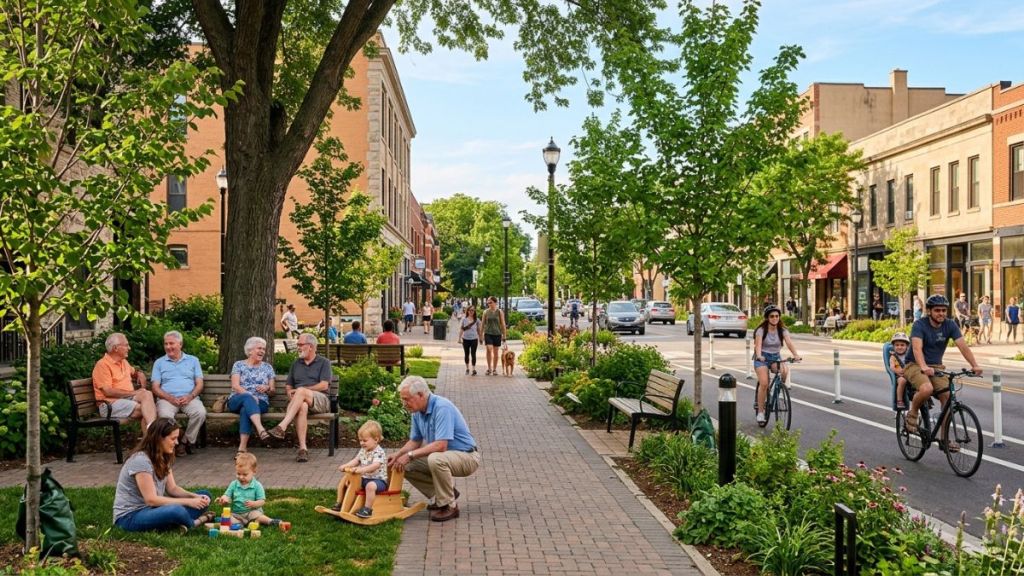
AARP, the nation’s largest nonprofit organization dedicated to serving older Americans, on Wednesday announced more than $8 million in grants across the country. The funds aim to make communities more livable, with specific targets toward improving housing, public spaces, transportation and digital connectivity.
As part of the 10th anniversary of the nonprofit’s Community Challenge grant program, AARP awarded $8.3 million in funds across 750 projects in all 50 states, as well as Washington, D.C., Puerto Rico and the U.S. Virgin Islands. About half of these projects are in rural communities and the record level of funding came amid record demand as AARP received 5,100 applications this year.
The funds also come at a time when the U.S. population is aging rapidly and seniors are overwhelmingly expressing a desire to age in place in their current homes.
Reverse mortgage professionals may be uniquely positioned to serve these needs through home equity-based financing solutions as clients seek to improve their homes with technology and live in neighborhoods with helpful amenities. Baby boomers also represent the largest shares of today’s home buyers and sellers, and they may be able to use reverse for purchase programs to remain in or relocate to senior-friendly communities.
“America is aging, and most older adults want to stay in the communities they know and love. There are a lot of things that localities can do to support residents of all ages,” Nancy LeaMond, AARP’s executive vice president and chief advocacy and engagement officer, said in a statement.
“AARP Community Challenge grants help transform local ideas into real improvements — from safer sidewalks and improved transportation options to public spaces that bring neighbors together and enhance community connections. As we celebrate the program’s 10th year, we’re proud to double our investment so even more communities can become great places to live for people at all stages of life.”
At a virtual meeting with reporters on Wednesday, AARP officials and two mayors whose cities have benefited from the grant funding spoke about the importance of making aging in place a national priority.
AARP noted that by 2034, Americans 65 and older are expected to outnumber children under 18 for the first time. The Community Challenge grants aim to create practical infrastructure — such as housing modifications, transportation and digital access — for older adults to remain independent.
The grants are also designed to move quickly as projects typically come to fruition in months, not years. The group has set a goal to improve the lives of 25 million seniors and support 100,000 community projects by 2028.
“Our health and well-being is shaped by whether or not we can safely cross the street, whether our home meets our needs as we age, whether we feel connected to the people and places around us,” AARP CEO Myechia Minter-Jordan said.
Mayors speak to local project impact
Mayor Paul TenHaken of Sioux Falls, South Dakota, said that his city previously benefited from a Community Challenge grant that funded pedestrian safety efforts — including repainted crosswalks and traffic-calming measures.
TenHaken said the changes reduced traffic speeds in the impacted areas by about 20%, leading Sioux Falls to make a related pilot program permanent. Sioux Falls was the first city in South Dakota to join the AARP Network of Age-Friendly States and Communities, which the group describes as an effort to connect elected officials, local leaders and organizations as they assess needs, plan and implement projects and evaluate their effectiveness.
“Creating livable, age-friendly cities … isn’t just a one-time thing where you spike the football, and you say, ‘Hey, we did that, all right, we’re good, move on.’ It’s an ongoing commitment,” TenHaken said.
“These Community Challenge grants, they really just provide a starting point for conversation about how we continue to enhance livability and provide community-based projects, and about the important role that we as policymakers in government play in establishing this sort of thing.”
Mayor Tim Keller of Albuquerque, New Mexico, said that his city has been part of the AARP Network since 2017. Albuquerque was a prior recipient of grants that, in part, paid to rehabilitate a number of homes with basic senior-centric safety features like wheelchair ramps, grab bars and handrails.
Keller said the funding has helped to stabilize the city’s aging housing stock and has extended the ability of some seniors to age in place by another five to 10 years. Albuquerque is also building new senior housing at a rapid rate and has made public transit free to all residents.
“This also helps us with our broader housing issue, because we don’t have empty houses turning over in the middle of neighborhoods, so it helps stabilize some of our older neighborhoods as well,” he said. “We don’t want people to have to leave behind their neighborhood, their independence or their sense of purpose or their family, just because of their age.”
Housing design grant recipients
Mike Watson, AARP’s director of livable communities, said that the grants are primarily funded through the nonprofit’s social mission budget. The remainder comes from corporate partnerships with Toyota, which funds pedestrian safety projects, and Microsoft, which funds digital connectivity projects.
One of the grant categories supports housing design competitions, with AARP allocating funds to 13 cities in 2026. Examples include:
- Tucson, Arizona: The city’s planning and development services department is leading a design competition that seeks to increase access to middle-housing options that are smaller and more appropriate for seniors.
- Fort Collins, Colorado: Officials at Colorado State University are working to produce age-friendly designs for accessory dwelling units (ADUs).
- Cedar Rapids, Iowa: City officials are embarking upon an ADU project that will focus on universal design and education, with a specific emphasis on aging-in-place support.
- Henderson, Nevada: The Las Vegas suburb is promoting competition to create mixed-use, transit-oriented housing concepts that would be built on city-owned land.
- Rhode Island: The state’s Executive Office of Housing will launch a statewide ADU design competition for preapproved housing plans as it seeks to reduce costs and offer more choices for senior residents.
“A lot of what is needed and what we see in this grant program are some of these really basic core necessities, and I think providers that are applying for grants and receiving them are also wrapping in some of those smart home devices,” Watson said, referring specifically to tools that detect falls and monitor the overall health of seniors.
“We wanted to build something that would meet immediate needs … not multiyear planning projects, but quick, on-the-ground, visible demonstrations of livability. They’re going to help communities build momentum and jumpstart change.”