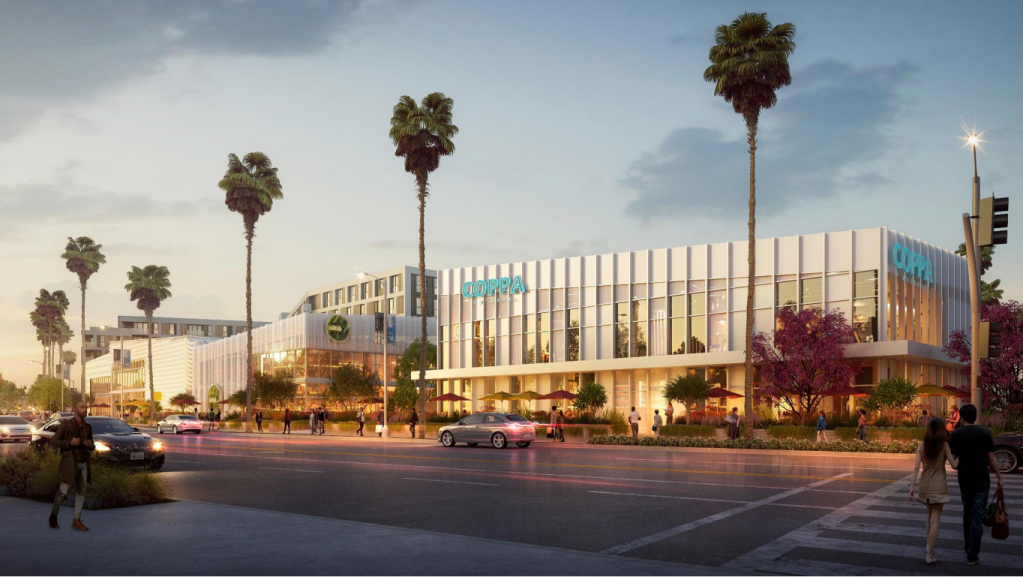
If all goes well, a string of low-slung retail buildings along the Los Angeles River could become one of the largest apartment developments to rise from California’s housing reforms.
Los Angeles City Planning Commissioners last week unanimously approved Riverwalk at Studio City, an 814-unit residential building on six acres of underused commercial property in L.A.’s Studio City. The vote marked a significant milestone for a project that would not have had a realistic path to approval not long ago, as its height and density far exceeded local limits.
California has become the nation’s most aggressive laboratory for housing reform, dismantling decades of local zoning control through a succession of state laws designed to force cities to build more homes. Facing a shortage economists estimate at more than 2.5 million units, Sacramento has systematically stripped away the defense mechanisms — height caps, environmental review mandates, parking minimums, discretionary approval processes — that municipalities long used to limit growth.
“The Housing Accountability Act is a game changer for us,” Sheri Bonstelle, a Greenberg Glusker attorney representing the developers, told HousingWire TBD. It combined with new environmental review exemptions “made this project much more feasible.”
California’s accountability law has barred cities from denying housing projects without cause since 1982. Designed as an early anti-not-in-my-backyard measure, it precludes rejections unless a project poses a specific threat to public health and safety.
But lawmakers have gone through three separate rounds of adding muscle to close loopholes and end-arounds in the law since 2017 as part of broader housing reform.
Last year’s changes to the accountability law came alongside reforms to the 1970 California Environmental Quality Act. Together, those updates shield certain residential projects from lengthy environmental reviews.
What has emerged now stands as a new legal architecture that other states are watching closely. It effectively subordinates neighborhood preferences to a statewide imperative to build more housing at greater density.
Project in the making
Genton Property Group, RC Development, and the Torino Companies plan to demolish the existing retail buildings and replace them with a series of two-to seven-story structures reaching as high as 84 feet. The project will include 76,000 square feet of commercial space and a landscaped pedestrian corridor connecting Ventura Boulevard to the river. MVE + Partners designed the project.
The team had been eyeing the site for a couple of years and considered filing earlier. But Bonstelle said they held off, waiting for legislation moving through the state legislature to pass. With the law signed, developers filed the application last October.
“We got to a hearing in seven months, which is unheard of in the City of L.A.,” Bonstelle said.
Without the new state laws, none of it would be permissible under local rules. A 1991 corridor plan limits buildings on the site to 30 feet tall. It also caps how much of a lot can be developed.
Riverwalk’s proposed building heights of 84 feet are nearly three times the local limit. Developers cleared that barrier by promising to set aside 46 affordable units for very low-income renters under a 99-year covenant. That commitment legally obligates the city to approve the larger project.
In exchange, state law compels the city to approve height waivers, density increases, setback reductions and the near-elimination of a transitional height buffer that would otherwise protect the single-family neighborhood directly behind the site.
Two formal appeals came before the commission at its June 11 hearing. Opponents argued the project’s scale was incompatible with the surrounding neighborhood, inconsistent with the Specific Plan and damaging to the river environment. Commissioners denied both appeals.
What’s next
The project is not out of the woods. The commission’s decision is appealable to the Los Angeles City Council, and opponents have indicated they intend to take that step.
A Council appeal puts elected officials in an uncomfortable position: block a project backed by state law and invite legal exposure or approve one that a vocal constituency has fought at every stage.
That friction is built into California’s housing reform architecture by design. Laws passed in Sacramento over the past decade were written to make local resistance costly, while making building more housing easier.
They shift discretion away from neighborhood councils and planning commissions toward a statewide calculus that treats density near transit and infill sites as a public good.
The L.A. City Council members may have the final say on the Studio City project. Council members opposed state reforms and have now shown resistance to them following their enactment.