

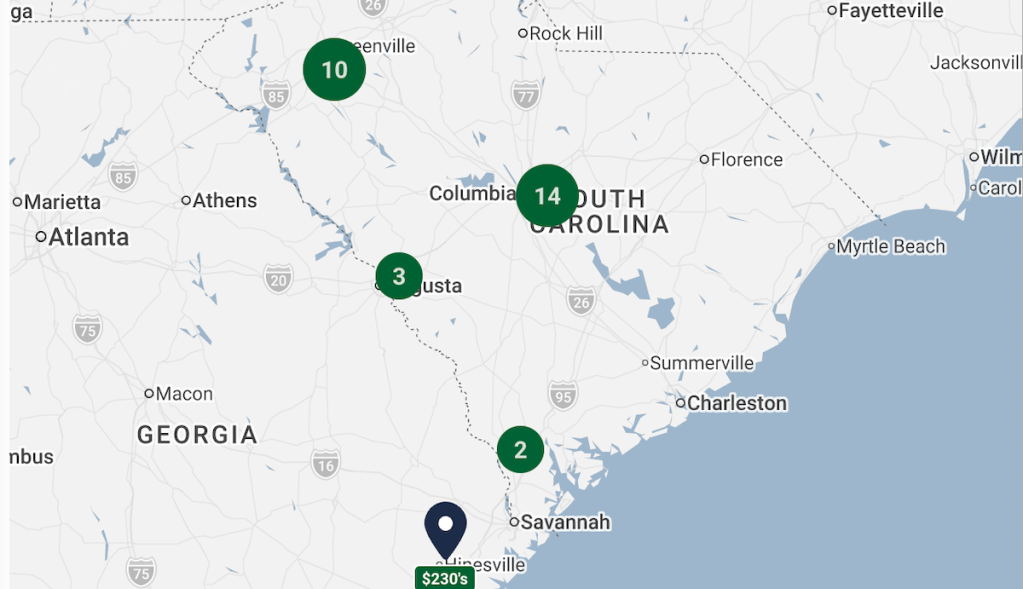
Clayton Home Building Group confirmed that its Southeast U.S. powerhouse operator, Mungo Homes has acquired Columbia, S.C.-based McGuinn Homes, a four-decade-old regional builder whose rise in HousingWire’s Homebuilder Rankings reflected a carefully executed growth strategy centered on attainable homeownership, disciplined operations and customer focus.
In announcing the acquisition, Clayton described the combination as built on a “platform of shared values,” emphasizing attainable homeownership, team-member experience, and community stewardship rather than financial engineering alone.
Geoff Shiley, CEO of Mungo Homes, in a provided statement, called the combination “a natural fit,” noting that McGuinn had built “a strong reputation, a values-driven culture, and a genuine commitment to the customers and communities they serve.” He added that those priorities “are the very priorities that have guided Mungo for decades.”
On its face, the acquisition appears to be another successful regional builder joining a much larger enterprise.
Looked at through the lens of the industry’s accelerating consolidation, however, the transaction says something considerably larger.
Over the past two weeks, HousingWire TBD has explored Berkshire Hathaway’s planned acquisition of Taylor Morrison through the themes of governance, scale, vertical integration and patient capital.
The acquisition of McGuinn Homes, while much smaller in financial terms, offers perhaps our clearest window yet into what those forces look like from the seller’s perspective.
“The same company that would buy a small builder in Columbia, South Carolina, bought Taylor Morrison in the same time frame,” McGuinn Homes founder Wade McGuinn said Wednesday in an exclusive interview. “If you don’t think it’s a tsunami … if you’re below No. 50, you really need to think about your family’s future and your company’s future.”
That observation may prove to be the most telling and impactful takeaway from the transaction. This is not just the story of Berkshire Hathaway buying another builder. Rather, it’s the story of one respected founder discerning that the competitive landscape itself has changed.
The view from below the Top 50
McGuinn does not describe the sale as a necessity-driven exit. The opposite. Over the past seven years, McGuinn Homes transformed itself from an approximately $80 million builder into a roughly $200 million enterprise, growing annual production from about 200 homes to nearly 1,000 while sharpening its focus on attainable, market-rate housing across South Carolina.
Yet even as the company accelerated its own growth, McGuinn became convinced that the industry’s economics were changing in ways that would eventually challenge even successful independent builders.
“M&A, which is creating scale, gets to a point where they can just price everybody left out of the market,” he said. “Not everybody’s going to be acquired, but everybody is going to go away. … I’m not talking about next year, but if you’re doing a strategic 10-year plan and you’re a builder, you need to figure out what that’s saying to you.”
Whether you’d agree with that conclusion or not, it harmonizes with a question simmering across residential development and homebuilding.
As larger builders, global housing companies, and institutional investors continue to assemble broader operating platforms, regional builders increasingly compete not only for homebuyers but also for land, labor, trade partners, distribution relationships, and capital. Scale is becoming less about bragging rights and more about operating leverage and navigating a changing ecosystem of partners, trades, manufacturers, land sellers, and financial stakeholders.
If Berkshire Hathaway’s pursuit of Taylor Morrison illustrates scale at the industry’s largest end, the McGuinn acquisition demonstrates that the same strategic logic is working its way through the regional builder landscape as well.
Seven years preparing for one decision
Contrary to what Thursday’s announcement might suggest, McGuinn did not wake up one morning and decide to sell.
The process began seven years ago after hearing Whelan Advisory, LLC. founder and CEO Margaret Whelan deliver a keynote presentation about technology – not as software, but as the force that ultimately enables scale.
“She wasn’t talking about technology,” McGuinn recalled. “She was talking about the technology of scale. How technology affects scale, and how scale is going to change the industry.”
That presentation led not to an immediate sale, but to a recapitalization that fueled McGuinn Homes’ next phase of growth. By the time the company returned to market this year, it had become one of the Southeast’s stronger privately held builders.
According to McGuinn, the company executed multiple confidentiality agreements, received several formal offers and narrowed the field through a competitive process. Remarkably, price ranked fifth among the family’s decision criteria.
“We had five criteria for sale, and the fifth one was price,” McGuinn said. “We wanted culture. We wanted to protect our people… We wanted to get a fair price for the company, but culture was very, very important. Our people are very important.”
That philosophy closely mirrors the acquisition framework Clayton executives have publicly articulated over the past decade.
“Our shared values of attainable homeownership, world-class team member experience and giving back to the people and communities we serve made this partnership an exceptional fit,” Clayton Home Building Group CEO Keith Holdbrooks said in announcing the transaction. “Together, we’ll expand access to affordable homes while serving as a united force for good in the communities where we build.”
For McGuinn, that alignment became tangible during an in-person meeting with Clayton executive Michael Rutherford.
“He said, ‘We’re the right people, we’re the right culture, we’re the right fit, we respect you guys, and we want to do this deal,'” McGuinn recalled. “They did every single thing they said they would do.”
Building platforms, not absorbing companies
During the process, Clayton introduced Mungo Homes into the transaction. Rather than maintaining McGuinn Homes as a stand-alone operating company indefinitely, the business ultimately will become part of the Mungo Homes platform one of Clayton’s largest site-built homebuilding operations across the Southeast.
“This is an exciting and strategic combination, and one we see as a natural fit,” Shiley said. “Over the past 40 years, McGuinn has built something special with a strong reputation, a values-driven culture and a genuine commitment to the customers and communities they serve.”
Historically, large public homebuilder acquisitions often resulted in the acquired company’s identity gradually disappearing inside the parent organization.
Clayton’s site-built strategy has generally followed a different path: preserving leadership continuity, maintaining local operating capability and integrating companies into broader regional platforms while seeking to retain the entrepreneurial culture that made them successful in the first place.
McGuinn says that mattered.
“The legacy wasn’t in my name,” he said. “The legacy… is what this company created for generations for my family, and what we did in the community.”
His son Kelly McGuinn, a veteran homebuilding executive, will remain with Mungo in a senior operating role.
A seller’s market unlike any before
Margaret Whelan believes the McGuinn transaction reflects a much broader shift in homebuilding M&A.
“The M&A markets are alive and well,” Whelan said. “There’s more buyers and sellers. The buyers have more money, more appetite than we’ve ever seen before. They’re coming from more places in the world than we’ve ever seen before… M&A is not going to slow down anytime soon.”
Even more striking, she says, today’s private builders often command valuation multiples above comparable public companies.
“It’s a seller’s market,” she said. “Most of these private builder deals are closing at multiples higher than publics are trading… which is unusual… but it is a function of supply and demand.”
McGuinn’s company, she noted, attracted six serious offers through a structured process before Clayton ultimately emerged as both the highest bidder and the strongest strategic fit.
Perhaps her most telling observation, however, echoes one of the central conclusions emerging from the Berkshire-Taylor Morrison series.
“Scale matters,” Whelan said. “It doesn’t actually matter if you’re public or private.”
She argues that the economics of remaining public have become less compelling than many builders once assumed.
“Going public hasn’t been much fun,” she said, noting that depressed valuations have made public equity a less attractive source of growth capital than many expected.
One regional builder at a time
Builder Advisor Group founder Tony Avila, whose firm has advised on four homebuilder sales to Clayton over the past decade, sees the McGuinn acquisition as another step in a strategy that has been unfolding for years.
“We have been honored to work across the table from Clayton on selling four companies over the past 10 years that have grown substantially with Clayton ownership,” Avila said. “Obtaining scale has been a hallmark of Clayton’s growth strategy both in its manufactured housing business and its production homebuilding investments.”
His observation adds another layer to Berkshire Hathaway’s broader housing strategy. If the pending acquisition of Taylor Morrison represents Berkshire adding one of the country’s premier public homebuilders to its portfolio, the acquisition of McGuinn Homes illustrates the company’s continued deepening of its regional operating platforms.
It’s amassing scale from both directions.
The macro
In conversation, Wade McGuinn offered what may be the most revealing insight.
“The story about Wade McGuinn not very interesting,” he said. “The story combined with the Taylor Morrison idea… that these people racing to the top are creating a scale that the trade partners, the vendors, the suppliers just can’t keep up with… that’s the industry story.”
As Berkshire Hathaway simultaneously expands through Taylor Morrison at the top of the industry and through companies like Mungo Homes across regional markets, the question confronting builders is becoming less about whether consolidation is occurring and more about how it is unfolding.
It is about how they intend to compete in a residential construction landscape increasingly shaped by scale, patient capital and interconnected operating platforms and shared values.


